Vacuuming your car with a wet and dry vacuum
Crumbs, sand, gravel, dog hair, spilled coffee: a wet and dry vacuum gets the inside of a car clean faster than a handheld vacuum. Here is the method, the order of work and the accessories that make the difference.
Contents
In brief: take out the mats and any objects, fit the crevice nozzle directly onto the hose handle, vacuum from top to bottom and from front to back, then the mats separately and the boot last. Plan an extension lead if the car is far from a socket: with the Kärcher WD 3 V, the cable and hose give about 7 m of reach.
Why use a wet and dry vacuum for the car
The inside of a car is a difficult terrain: sand and gravel embedded in the carpet, crumbs between the seats, soil brought in on shoes, pet hair, sometimes a spilled liquid. A handheld vacuum often lacks power and capacity. A household vacuum does not like sand or gravel.
A wet and dry vacuum combines the strengths: a wide hose that swallows gravel, a tank that does not fill up in five minutes, good vacuum to lift debris out of the fibres, and the ability to pick up a liquid. Kärcher lists vehicles among the WD 3 V’s areas of use, and the Amazon listing mentions cleaning car interiors.
What you need
- The vacuum, filter in place, without a bag unless there is a lot of fine dust.
- The crevice nozzle, the key accessory for the car.
- The floor nozzle, for the mats laid on the ground.
- An extension lead, suitable for outdoor use, if the car is far from a socket.
- A soft brush to loosen hair and sand.
- Microfibre cloths for the surfaces after vacuuming.
- A bag for the objects and rubbish taken out of the car.
Preparing the car
- Park in the shade, near a socket, doors open.
- Empty the car: door pockets, child seats, objects under the seats, the boot.
- Take out the mats and shake them to knock off the worst.
- Slide the front seats right back to clear the front, then forward for the back.
- Brush the areas where sand and hair are embedded, to loosen them before vacuuming.
The method, area by area
The order matters: dust falls, so you start at the top. And you work towards the back so as not to go over a clean area again.
- Dashboard and console: crevice nozzle, or the blower for the air vents.
- Front seats: seat, backrest, seams, between the seat and the backrest.
- Door sills and front door pockets.
- Front floor, under the pedals and under the seats.
- Rear seats, then the rear floor.
- Mats, separately, laid on the ground.
- Boot, last.
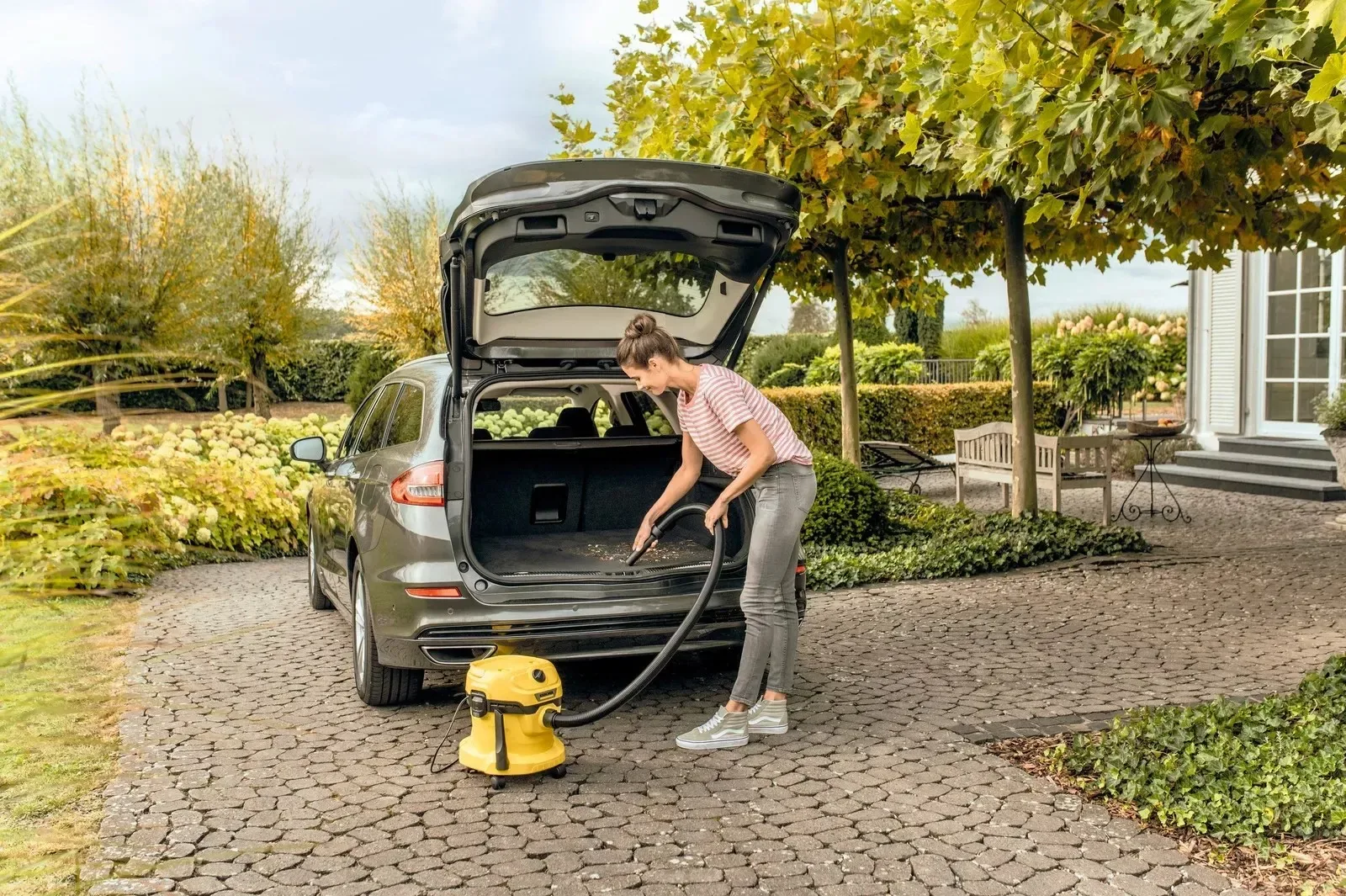
With the WD 3 V, fit the crevice nozzle directly onto the hose’s removable handle, without a tube: it is easier to manoeuvre inside the car. Leave the vacuum on the ground, next to the door.
The seats
Fabric seats hold crumbs, dust and hair in their fibres and seams. Pass the crevice nozzle slowly, pressing lightly, in several directions. Concentrate on the join between the seat and the backrest, where everything collects, and on the seat runners.
Leather seats need more care: avoid rubbing the hard nozzle on the leather, and use a nozzle with a brush if you have one. Kärcher’s car and interior kits include gentler nozzles for delicate surfaces.
Mats and carpet
Floor mats are best cleaned outside the car. Lay them flat on the ground and vacuum them with the floor nozzle, in one direction then the other. Rubber mats can be hosed down and dried before being put back.
The car’s carpet holds sand deep down. Brush it first, then vacuum slowly with the crevice or floor nozzle depending on the space. For a wet carpet, pick up the water without a bag and leave it to dry with the doors open.
The boot
The boot collects soil, leaves, beach sand and all sorts of debris. The tube alone, without a nozzle, swallows the biggest debris. The crevice nozzle cleans the edges and the spare wheel well. A floor nozzle on a short tube quickly covers the floor of the boot.
The tricky cases
Sand
Fine sand gets embedded in the carpet. Brush vigorously to loosen it, then vacuum slowly. Repeat if needed. Fine sand can load the filter: check it after a big session.
Pet hair
Hair clings to the fibres. A rubber glove or a rubber brush gathers it into clumps before vacuuming. The crevice nozzle, passed slowly, then picks up the clumps.
A spilled liquid
Coffee, juice, water: vacuum immediately without a bag, with the crevice nozzle, then dab with a damp cloth and vacuum again. For a sugary liquid, rinse lightly with clean water and vacuum. Rinse the tank afterwards.
Gravel
The WD 3 V’s 35 mm hose easily swallows gravel. Remove the nozzles for large pieces.
Snow and slush
In winter, the vacuum picks up melted snow from the mats and carpet. Leave the inside to dry with the doors open or the heating on to avoid condensation and smells.
The blower in the car
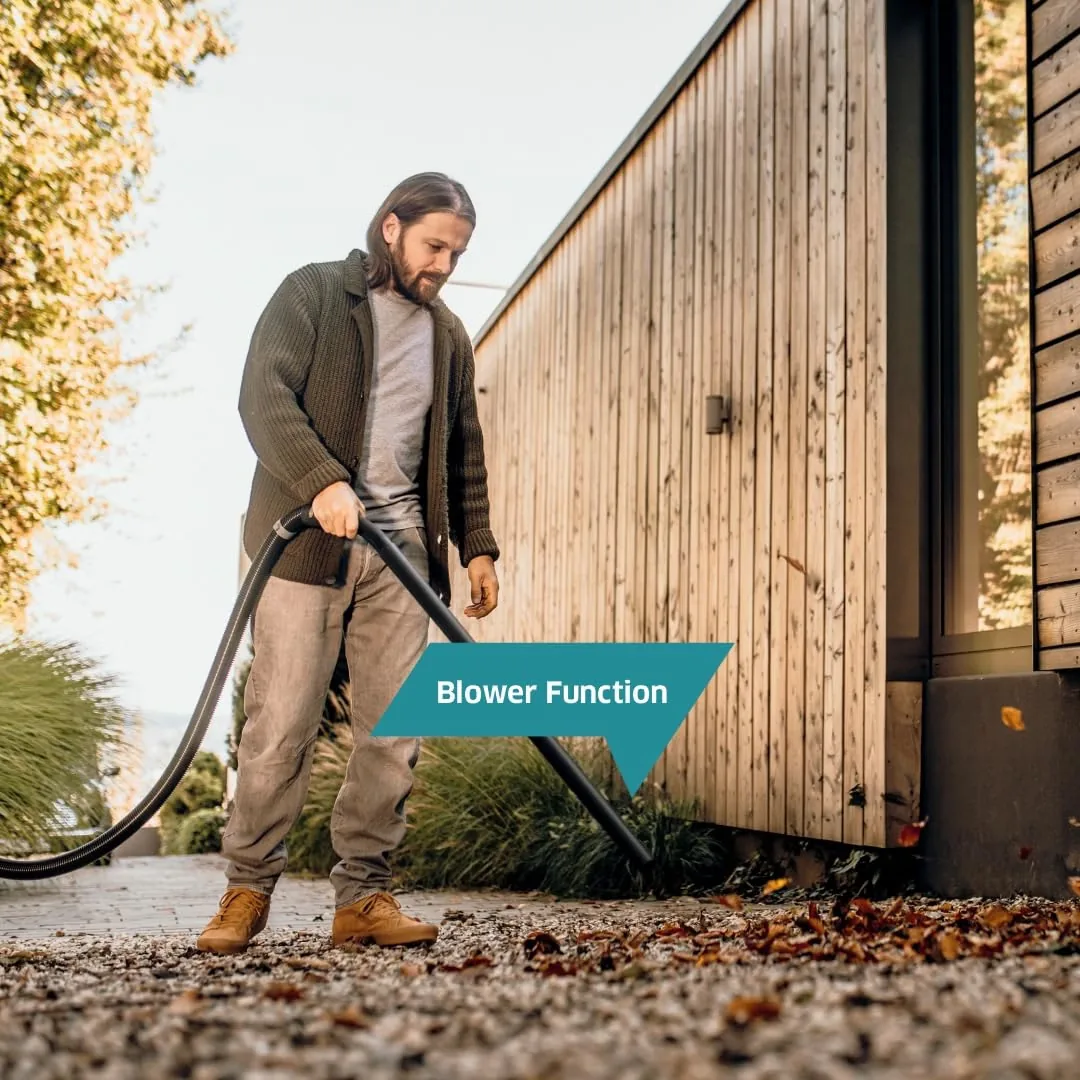
The WD 3 V’s blower helps dislodge dust from the air vents, the grooves of the console, the seat runners and corners the nozzle cannot reach. Blow first, then vacuum. Empty the tank before switching to blower mode if it contains fine dust, and wear goggles.
The accessories that help
| Accessory | Why it helps | Kärcher reference |
|---|---|---|
| Car kit | Nozzles suited to the car interior | 2.863-316.0 |
| Interior cleaning kit | Nozzles and brushes for delicate surfaces | 2.863-304.0 |
| Extra-long crevice nozzle | Between and under the seats | 2.863-306.0 |
| 3.5 m hose extension | Reaching the boot and the back without moving the vacuum | 2.863-305.0 |
References taken from the technical data sheet for the WD 3 range (1.628-101.0). Check compatibility before buying. Our accessories guide details each one.
Mistakes to avoid
- Vacuuming with the mats in place: you vacuum half as well.
- Starting with the floor: the dust from the seats then falls back down.
- Rubbing the hard nozzle on leather, glossy plastic or screens.
- Pulling the vacuum around the car by the hose: you damage the hose and the bodywork.
- Letting a liquid soak into the carpet.
- Vacuuming hot cigarette ash: Kärcher advises against vacuuming ash.
How often to clean
A quick pass every two to four weeks, depending on use, stops sand and crumbs from getting embedded. A full clean, seats and boot included, two to four times a year is enough for most cars. With a pet, children or frequent trips to the beach, increase the frequency. These are practical pointers, not rules: adapt them to your car.
The ten-minute express clean
You do not need a full clean every time. A quick, well-organised pass keeps the inside clean between two full sessions.
- Two minutes: remove the rubbish and take out the front mats.
- Three minutes: crevice nozzle on the handle, vacuum the front seats and the front floor.
- Three minutes: front mats on the ground, with the floor nozzle, then put them back.
- Two minutes: a pass over the rear floor and the floor of the boot.
Leave the vacuum by the driver’s door: with 2 m of hose, you reach the front and a good part of the back without moving it.
The full clean, step by step
Two to four times a year, a full clean makes the inside like new again. Allow an hour to an hour and a half depending on the state of the car.
- Empty everything: boot, door pockets, glovebox, child seats.
- Dust the top: dashboard, air vents, console, with the blower then the nozzle.
- Brush the seats and carpet to loosen sand and hair.
- Vacuum seats, floor and runners, front then back, seats forward then back.
- Treat stains: a little clean water or a fabric cleaner, then pick up the moisture without a bag.
- Clean the mats outside the car, and leave rinsed rubber mats to dry.
- Vacuum the boot and the spare wheel well.
- Wipe the hard surfaces with a slightly damp microfibre cloth.
- Air the car with the doors open before putting everything back.
Cars and pets
A dog in the car leaves hair, soil, sometimes sand and damp. A few habits make cleaning easier:
- A cover or a blanket on the back seat or in the boot limits embedded hair: you shake it, vacuum it flat and wash it.
- A rubber glove run over the seats gathers the hair before vacuuming.
- More frequent passes, even quick ones, stop hair from working its way into the carpet.
- After a walk in the rain, pick up the moisture and mud without a bag, then let it dry.
Long hair sometimes wraps around the brushes of optional nozzles: remove it after each session.
After the beach or the mountains
Beach sand gets everywhere: under the mats, into the runners, between the seams. Shake the mats and towels first, brush the carpet vigorously, then vacuum slowly in several crosswise passes. Fine sand behaves like fine dust: it loads the filter, so check it afterwards.
Coming back from the mountains, the issue is damp: melted snow, wet shoes, road salt. Pick up the water from the mats and carpet without a bag, then let the inside dry. Salt leaves white marks on the carpet: a little lukewarm water, then vacuuming up the moisture, reduces them.
Looking after the vacuum after the car
- Empty the tank: sand and gravel soon get heavy.
- Tap the filter, especially after fine sand.
- Rinse the tank if you picked up a liquid or mud.
- Remove hair and threads from brush nozzles.
- Put the crevice nozzle back in its holder for next time.
Our maintenance guide details these steps.
Vacuum and cleaning products
The vacuum removes debris and moisture; it does not clean ingrained stains or greasy surfaces. For a complete result, combine it with a few simple products:
- a fabric cleaner or a little soapy water for stains on the seats, applied with a cloth, then the moisture picked up without a bag;
- a slightly damp microfibre cloth for the dashboard, plastics and door cards, after vacuuming;
- a product suitable for leather for leather seats, after gentle dusting;
- a glass cleaner for the inside of the windscreen, last.
Never vacuum flammable products or solvents. And after picking up soapy water, rinse the tank to avoid deposits. Finally, let the inside dry with the doors open before shutting the car: trapped moisture causes condensation and smells.
This vacuum-and-cloth combination covers most interior cleaning without a trip to a car wash.
Wet and dry vacuum or handheld vacuum?
Many drivers hesitate between a small cordless handheld vacuum and a wet and dry vacuum. Both have their place. The handheld is unbeatable for a crumb on a seat or a two-minute clean at a motorway services: it needs no socket and no storage space. The wet and dry vacuum takes the lead as soon as the inside is really dirty: embedded sand, gravel, lots of hair, a spilled liquid. Its power, tank and wide hose do in one pass what a handheld would take several charges to do.
The ideal combination, for anyone who cleans their own car, is therefore a small appliance for touch-ups and a wet and dry vacuum for proper cleans, which also serves in the garage, on the patio and for water leaks.
Electric and hybrid cars
Cleaning the inside of an electric or hybrid car is no different from any other car: the vacuum does not touch the high-voltage system. Simply avoid the charging cable and the socket area, and never vacuum near the charging connector while the car is plugged in. Some models have a front storage compartment: it collects leaves and dust like a boot, and is cleaned in the same way. As always, switch the car off before cleaning, and keep the vacuum’s own cable away from any water.
Frequently asked questions
Is the cable long enough for the car?
With the WD 3 V, the 4 m cable and 2 m hose give about 7 m of reach. Plan an extension lead if the car is further away.
Do you need a bag for the car?
Generally not. It helps if the inside is very dusty.
Can you clean a campervan?
Yes, with the same method. The hose extension makes it easier to reach the back of the living area.
Can you vacuum leather seats?
Yes, with a brush nozzle or carefully, without rubbing the hard nozzle.
Can you vacuum a wet seat?
Yes, without a bag. Then leave it to dry with the doors open.
Cleaning without limits.
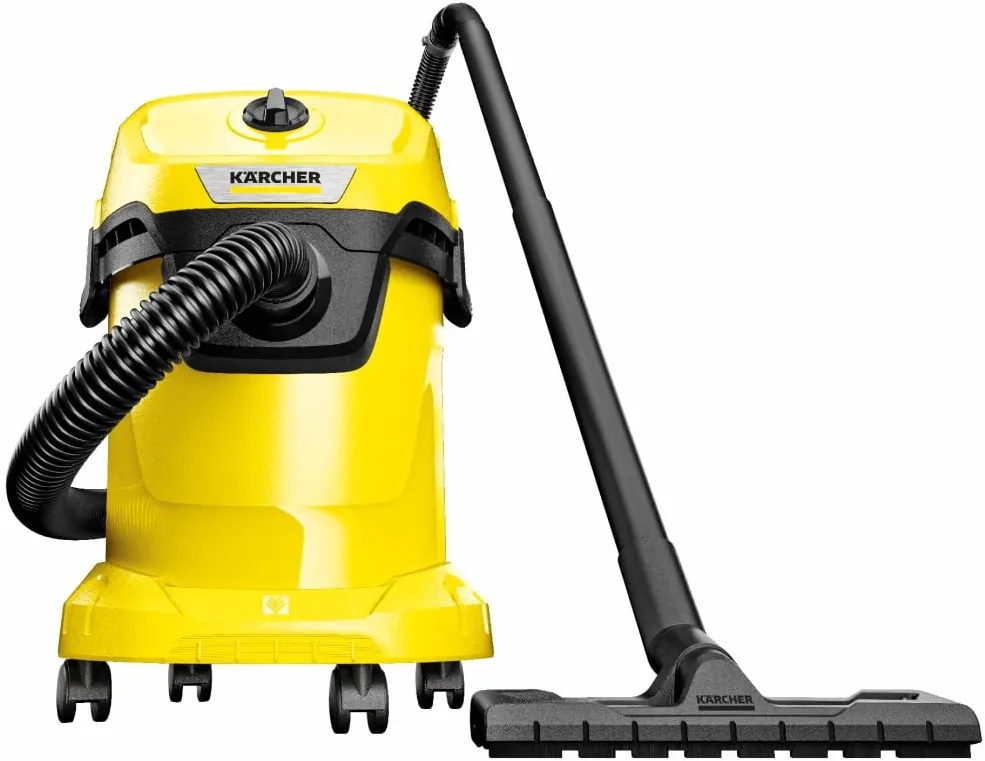
1000 W · 17 L tank · 2 m hose · 4 m cable · blower · cartridge filter. Prices change often on Amazon: check the price, the seller and the exact version (WD 3 V, WD 3 S, WD 3 P) before you order.
Check the price on AmazonAffiliate link · new tab